

Christmas in Iceland 2026: Markets, Things to Do & Holiday Tours
Christmas markets, Yule Lads, festive food and the best things to do in Iceland in December – your 2026 guide to a calm, cosy Icelandic Christmas.
November 9, 2026
Christmas in Iceland 2026: Markets, Things to Do & Holiday Tours
Christmas markets, Yule Lads, festive food and the best things to do in Iceland in December – your 2026 guide to a calm, cosy Icelandic Christmas.
November 9, 2026
Christmas in Iceland runs from the first Yule Lad's arrival on 12 December to Þrettándinn on 6 January – thirteen days of jól rather than twelve. Expect short, softly lit days with about four hours of daylight, Christmas markets in and around Reykjavík from mid-November, festive food you won't find anywhere else, and long, dark evenings that give you a real chance of seeing the northern lights.
This guide covers the 2026 Christmas markets, the key dates, what's open over the holidays, and the best things to do in Iceland in December – so you can plan a calm, well-organised festive trip.
Explore our Christmas and New Year tours in Iceland to start planning.
Christmas in Iceland at a glance
- Christmas markets: Hafnarfjörður's Christmas Village opens on 13 November 2026; the Reykjavík, Heiðmörk and Árbær markets follow around the start of Advent (29 November 2026).
- Yule Lads: 13 Icelandic "Santas" arrive one per night from 12 to 24 December, then leave one by one until 6 January.
- Daylight: around 5 hours on 1 December and just over 4 hours at the winter solstice on 21 December.
- The big night: Christmas Eve (24 December). Celebrations begin at 18:00, when church bells ring in Christmas.
- Plan ahead: many shops, restaurants and services close early on 24 and 31 December, and many are closed on 25 December – book tables and tours in advance.
What is Christmas like in Iceland?
Christmas in Iceland is quieter and more home-centred than in many countries, but it is also one of the most atmospheric times of year to visit. Reykjavík's streets are strung with lights, candles glow in almost every window, and the low winter sun casts long, pastel light across the snow and mountains during the few hours of daylight.
Instead of one Santa Claus, Iceland has 13 Yule Lads (Jólasveinar) – mischievous characters from folklore, sons of the troll Grýla and her husband Leppalúði. Children leave a shoe on the windowsill each night from 12 December and wake to a small gift – or a potato, if they have misbehaved.
Christmas Eve is the main celebration, followed by two quiet public holidays on 25 and 26 December. Then the mood changes completely: New Year's Eve in Reykjavík is one of the liveliest in Europe, with bonfires and fireworks across the city.
- Read more about the Yule Lads, the Christmas Cat and other festive folklore in our guide to Icelandic Christmas traditions.
Key Christmas dates in Iceland
- From mid-November: Christmas markets and lights begin to appear around the capital area.
- First Sunday of Advent (29 November 2026): the start of the Christmas season for most Icelanders.
- 12 December: the first Yule Lad, Stekkjastaur, arrives. One more arrives each night until 24 December.
- 23 December – Þorláksmessa (St Þorlákur's Day): the traditional day to eat fermented skate, and a busy evening of late-night shopping in central Reykjavík.
- 24 December – Aðfangadagur (Christmas Eve): the main celebration. Christmas begins at 18:00 with dinner and presents.
- 25 December – Jóladagur (Christmas Day): a quiet family day.
- 26 December – Annar í jólum (Boxing Day): also a public holiday.
- 31 December – Gamlárskvöld (New Year's Eve): bonfires, fireworks and the midnight countdown.
- 6 January – Þrettándinn: the 13th and last day of Christmas, when the last Yule Lad leaves and towns light farewell bonfires.

Christmas markets in Reykjavík and the capital area (2026)
Yes – Iceland does have Christmas markets. They are smaller and more local than the big markets of central Europe, which is a large part of their charm: think handmade crafts, Icelandic wool, smoked lamb, warm drinks and a strong sense of community. Opening hours change from year to year, so check each market's own page before you go.
Jólamarkaðurinn at Austurvöllur and the Ingólfstorg ice rink
Reykjavík's main Christmas market fills Austurvöllur square, in front of the Parliament building, with wooden huts selling local crafts, gifts and warm drinks. It traditionally runs from around the start of Advent until 23 December, with longer opening hours in the final days before Christmas.
A few steps away, the outdoor ice rink on Ingólfstorg square usually opens in late November and is popular with families. Skates and helmets can be hired on site.
- 2026 opening dates and hours: jolamarkadur.is
Jólaþorpið – the Christmas Village in Hafnarfjörður
The harbour town of Hafnarfjörður, around 20 minutes' drive from central Reykjavík, transforms its town centre into a Christmas Village of small wooden houses selling crafts, decorations and seasonal treats, with music and entertainment around a large Christmas tree.
In 2026 the Christmas Village opens on Friday 13 November and runs until 23 December. Opening hours are:
- Fridays: 17:00–20:00
- Saturdays: 13:00–20:00
- Sundays: 13:00–18:00
- 23 December (Þorláksmessa): 13:00–21:00
More information: Hafnarfjörður Christmas Village
Heiðmörk Christmas Market
For a market in a forest setting, head to Elliðavatnsbær farmhouse in Heiðmörk, the large nature reserve on the edge of Reykjavík. Run by the Reykjavík Forestry Association, the market is open every weekend in Advent, with Icelandic crafts, food and family activities. This is also where many local families choose their Christmas tree, and in the Christmas Forest (Jólaskógurinn) at nearby Hólmsheiði you can even cut down your own.
- Dates and opening hours: heidmork.is
Christmas at Árbær Open Air Museum
Árbær Open Air Museum shows how Icelanders celebrated Christmas in earlier times. In 2026, its Christmas programme takes place on Sunday 13 and Sunday 20 December, from 13:00 to 16:00. You can watch leaf bread (laufabrauð) being cut and fried, see candles being made, taste hangikjöt and traditional Christmas sweets, dance around the Christmas tree and meet the Yule Lads, who are known to peer through windows and play tricks on visitors.
- Programme details: Reykjavík City Museum
Many churches and concert halls, including Harpa and Hallgrímskirkja, also hold Christmas concerts throughout December – a lovely way to spend a dark evening in the city.
Hiking or snow boots? Down jacket or parka? What to pack for a trip to Iceland

December in Iceland means wind, rain, snow and ice – sometimes in the same day. Good layers, waterproofs and boots with a firm grip will make your trip far more comfortable. Find out what you need in our guide to what to pack for Iceland.
Christmas and New Year tours in Reykjavík
Alongside the sights that are here all year round, we run a small selection of seasonal tours designed to introduce you to how Icelanders celebrate.
- Reykjavík Christmas Walk: a guided cultural and food walk through the festive city centre, introducing Icelandic Christmas traditions – including a taste of Icelandic Christmas favourites and a small Christmas gift.
- Reykjavík Christmas Walk & Golden Circle: combine the Christmas walk with a day on the Golden Circle for a varied festive day.
- New Year's Traditions and Mystery Tour: discover the folklore surrounding New Year in Iceland, including a visit to a mystical elf garden and a toast in the woods.
- New Year's Eve Bonfire Tour: join locals around one of the traditional neighbourhood bonfires on New Year's Eve.
- New Year's Fireworks Cruise: watch Reykjavík's famous midnight fireworks from the sea, with a glass of Champagne to toast the New Year.
See all our Christmas and New Year tours in Iceland.
Things to do in Iceland in December
December is one of the best months for winter experiences in Iceland. Days are short, so tours are planned to make the most of the available light – and the long nights are exactly what you need for the northern lights.
Northern lights tours

With around 20 hours of darkness a day, December gives you plenty of opportunities to see the aurora borealis, provided the sky is clear and solar activity is high enough. Sightings are never guaranteed, so it is wise to plan your northern lights tour early in your trip – if conditions don't allow, you'll have time to try again.
Our northern lights tours head away from the city lights to the best locations on the night, chosen by guides who monitor the forecasts closely. For a more comfortable wait, the Aurora Basecamp on the Reykjanes Peninsula explains the science behind the lights before you step outside to look for them. Find out more in our guide to the northern lights season.
Ice caves and glaciers

Glaciers cover around a tenth of Iceland, and winter is the season for exploring them from the inside. Natural ice caves form beneath Vatnajökull, Iceland's largest glacier, and are generally visited between autumn and spring, when the ice is stable. Closer to Reykjavík, Langjökull glacier has a man-made ice tunnel that can be visited all year. Always explore glaciers and ice caves with a certified guide.
- Explore our glacier and ice cave tours
Snowmobiling

A snowmobile tour on Langjökull, Iceland's second-largest glacier, or on Mýrdalsjökull on the South Coast is a memorable way to experience Iceland's winter landscape. No previous experience is needed.
Geothermal lagoons and hot springs

There are few better ways to spend a dark December afternoon than in warm geothermal water with snow falling around you. Popular choices near Reykjavík include:
- Sky Lagoon: an oceanside lagoon just outside the city centre, with an infinity edge facing the North Atlantic. Explore our Sky Lagoon tours.
- Hvammsvík Hot Springs: natural hot springs on the shore of Hvalfjörður fjord, where some pools rise and fall with the tide. Book a Hvammsvík tour.
See all our geothermal tours in Iceland. Opening hours over the holidays can differ from the rest of the year, so check before you book.
Best places to visit in Iceland in December
If you prefer a gentler pace, these classic day trips from Reykjavík are just as rewarding in winter – often more so, under snow.
The Golden Circle
The Golden Circle combines three of Iceland's best-known sights: Þingvellir National Park, where Iceland's parliament was founded in 930 and where you can walk between two tectonic plates; the Geysir geothermal area, where Strokkur erupts every few minutes; and Gullfoss, a powerful two-tiered waterfall that is often partly frozen in December.
- Read our guide to the Golden Circle or explore our Golden Circle tours.
The South Coast, Reynisfjara and Jökulsárlón
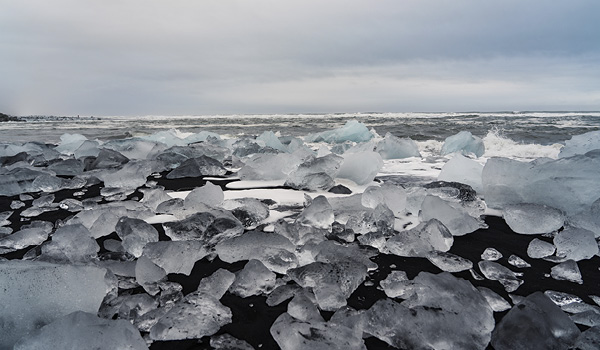
The South Coast is one of the most rewarding winter routes in Iceland, with waterfalls such as Seljalandsfoss and Skógafoss, glacier views and the black sand beach at Reynisfjara near Vík. Reynisfjara's waves are powerful and unpredictable, especially in winter, so always keep well back from the water's edge.
Further east, Jökulsárlón glacier lagoon is filled with icebergs that have broken off Breiðamerkurjökull glacier, and many of them wash up on the black sand of nearby Diamond Beach. Jökulsárlón is a long day from Reykjavík in winter, so a multi-day tour lets you enjoy it at a more relaxed pace.
- Read our guide to the South Coast and explore our South Coast tours.
Many highland roads are closed in winter, and driving conditions can change quickly. Joining a guided tour means you can enjoy the scenery while a professional driver handles the roads.
What do Icelanders eat at Christmas?
Food is at the heart of an Icelandic Christmas, and many dishes are eaten only at this time of year.
- Hamborgarhryggur: smoked, glazed pork loin – the most common main course on Christmas Eve in many homes.
- Rjúpa (ptarmigan): a traditional Christmas Eve dish for many families, usually served with a rich game gravy.
- Hangikjöt: smoked lamb, traditionally served on Christmas Day, often with a white béchamel-style sauce, peas and leaf bread.
- Kæst skata: fermented skate, eaten on 23 December. The smell is strong and the taste is very much acquired – try it at least once.
- Laufabrauð (leaf bread): thin, crisp, deep-fried bread cut into intricate patterns. Families often make it together in December.
- Smákökur: homemade Christmas biscuits, baked in many varieties throughout Advent.
- Malt og appelsín: a mix of malt drink and orange soda that is a Christmas staple.
Many Reykjavík restaurants offer festive menus in December, and Christmas buffets (jólahlaðborð) are a popular tradition. Book ahead, as tables fill up fast – especially on 24, 25 and 31 December, when many restaurants close or open only for special menus.
Christmas Eve, Christmas Day and New Year's Eve in Iceland
How do Icelanders celebrate Christmas Eve?

Christmas Eve (Aðfangadagur) is the most important day of the Icelandic Christmas. Shops close in the early afternoon, and at 18:00 church bells ring in Christmas, broadcast on national radio. Families sit down to their festive dinner and then open presents.
Books are among the most popular gifts. This tradition, known as Jólabókaflóðið – the Christmas book flood – means many Icelanders spend the rest of the evening reading. Some attend midnight mass.
Christmas Day (Jóladagur) is a quiet day for family visits and another big meal, often hangikjöt. Most shops and many restaurants are closed, and public transport runs a reduced service.
New Year's Eve in Iceland

For many Icelanders, New Year's Eve is an even bigger celebration than Christmas. After an evening meal, people gather at neighbourhood bonfires. At 22:30, much of the country sits down to watch Áramótaskaupið, a comedy show looking back on the year. Shortly before midnight, everyone heads outside, and Reykjavík lights up with fireworks set off by thousands of residents. Many of the fireworks are sold by Iceland's volunteer search and rescue teams, for whom it is an important annual fundraiser.
Read our guide to New Year's Eve in Iceland.
What is the weather like in Iceland at Christmas?
December weather in Iceland is changeable. In Reykjavík, temperatures typically hover around freezing, and a mix of rain, sleet, snow and strong wind is common. A white Christmas is possible, but it isn't guaranteed in the capital – snow is more reliable in the north and in the mountains.
Daylight is short. In Reykjavík, the sun rises around 11:20 and sets around 15:30 at the winter solstice, giving just over four hours of daylight. Twilight before sunrise and after sunset adds a little more usable light, often in beautiful pink and blue tones.
Before any trip outside the city, check the weather forecast at vedur.is and road conditions at umferdin.is. Tours may be rescheduled if conditions are unsafe.
Practical tips for Christmas in Iceland
- Book early. December is busy, and seasonal tours, restaurants and accommodation fill up fast.
- Plan around the holidays. On 24 and 31 December, most shops close in the early afternoon. Many are closed on 25 December and 1 January.
- Public transport is limited. On Christmas Eve and New Year's Eve, Reykjavík's city buses (Strætó) usually stop running in the mid-afternoon, and run a reduced service on Christmas Day, Boxing Day and New Year's Day. Check straeto.is for the current holiday timetable.
- Getting to and from the airport. Flybus departures leave Keflavík Airport shortly after every flight arrival, day or night. Check the holiday timetable when you book.
- Use the daylight. Plan sightseeing for late morning to mid-afternoon, and save the dark evenings for markets, concerts, lagoons and the northern lights.
- Dress in layers. Waterproof outer layers, a warm hat and gloves, and boots with good grip are essential – ice cleats are useful on icy pavements.
Icelandic Christmas fun facts
- There are 13 days of Christmas. Icelandic jól runs from 24 December to Þrettándinn on 6 January.
- The Yule Lads have scary parents. Their mother, Grýla, is a troll said to eat naughty children, and their father is Leppalúði.
- Beware the Christmas Cat. Jólakötturinn is said to eat anyone who hasn't received a new piece of clothing before Christmas.
- St Þorlákur is Iceland's patron saint. His feast day, Þorláksmessa on 23 December, is traditionally a busy evening of last-minute Christmas shopping.
- Magic happens at New Year. Folklore says that cows can talk, seals take human form and elves move house around New Year and Þrettándinn.
Find out more in our guide to Icelandic Christmas traditions.
Frequently asked questions about Christmas in Iceland
Does Iceland have Christmas markets? Yes. The main ones in the capital area are Jólamarkaðurinn at Austurvöllur in central Reykjavík, the Christmas Village (Jólaþorpið) in Hafnarfjörður, the forest market at Heiðmörk and the Christmas programme at Árbær Open Air Museum. They are smaller than central European markets, with a strong focus on local crafts and food.
When do the Reykjavík Christmas markets open in 2026? Hafnarfjörður's Christmas Village opens on Friday 13 November 2026. The market at Austurvöllur and the Heiðmörk market typically open around the first weekend of Advent (28–29 November 2026), and the Árbær Open Air Museum Christmas programme runs on 13 and 20 December. Most markets close on 23 December.
Is Iceland worth visiting at Christmas? Yes, if you enjoy a calm, cosy festive atmosphere. You can combine Christmas markets, local food traditions and city lights with northern lights tours, ice caves and geothermal lagoons. Plan around the shortened opening hours on 24, 25 and 31 December, and book tours and restaurants early.
What is open in Reykjavík on Christmas Eve and Christmas Day? On 24 December, most shops close in the early afternoon and city buses stop running around mid-afternoon. On 25 December, most shops are closed and many restaurants are closed or serve set menus. Many hotels and some restaurants stay open, and selected tours run over the holidays, so it's best to book in advance.
How many hours of daylight does Iceland have at Christmas? In Reykjavík, there is just over four hours of daylight around Christmas. At the winter solstice on 21 December, the sun rises at about 11:20 and sets at about 15:30. Days begin to lengthen slowly after that.
Will there be snow in Iceland at Christmas? Possibly, but it isn't guaranteed. Reykjavík's coastal climate means December can bring rain as well as snow, with temperatures around freezing. Snow is more reliable in north Iceland and at higher elevations.
Can you see the northern lights at Christmas in Iceland? Yes, December is one of the best months for northern lights, thanks to the long hours of darkness. You'll need clear skies and enough solar activity, so sightings are never guaranteed. Book your northern lights tour early in your trip so there's time to try again if needed.
Who are the Yule Lads? The Yule Lads (Jólasveinar) are 13 mischievous figures from Icelandic folklore who play the role of Santa Claus. One arrives each night from 12 December to Christmas Eve, leaving small gifts in children's shoes, and they return home one by one until 6 January.
Plan your Christmas in Iceland with Reykjavik Excursions
Reykjavik Excursions has been showing visitors Iceland since 1968. Whether you want to wander the Christmas markets, taste Icelandic festive food, chase the northern lights or see the Golden Circle under snow, our guides and drivers will take care of the details – so you can relax and enjoy the season.
Explore our Christmas and New Year tours and winter tours in Iceland to start planning your festive trip.


Tours in the spotlight


7 Tours
REYKJAVIK EXCURSIONS BLOG
Get inspired by our blog! Information and tips and must see places in Iceland, fun facts, customs and more.


The Silver Circle of West Iceland - Your Guide
You’ve heard of the Golden Circle, but here’s why you should head to Iceland’s western region to explore the msytical Silver Circle tour route.
Read BlogChristmas in Iceland 2026: Markets, Things to Do & Holiday Tours
Christmas markets, Yule Lads, festive food and the best things to do in Iceland in December – your 2026 guide to a calm, cosy Icelandic Christmas.
November 9, 2026
Christmas in Iceland 2026: Markets, Things to Do & Holiday Tours
Christmas markets, Yule Lads, festive food and the best things to do in Iceland in December – your 2026 guide to a calm, cosy Icelandic Christmas.
November 9, 2026
Christmas in Iceland runs from the first Yule Lad's arrival on 12 December to Þrettándinn on 6 January – thirteen days of jól rather than twelve. Expect short, softly lit days with about four hours of daylight, Christmas markets in and around Reykjavík from mid-November, festive food you won't find anywhere else, and long, dark evenings that give you a real chance of seeing the northern lights.
This guide covers the 2026 Christmas markets, the key dates, what's open over the holidays, and the best things to do in Iceland in December – so you can plan a calm, well-organised festive trip.
Explore our Christmas and New Year tours in Iceland to start planning.
Christmas in Iceland at a glance
- Christmas markets: Hafnarfjörður's Christmas Village opens on 13 November 2026; the Reykjavík, Heiðmörk and Árbær markets follow around the start of Advent (29 November 2026).
- Yule Lads: 13 Icelandic "Santas" arrive one per night from 12 to 24 December, then leave one by one until 6 January.
- Daylight: around 5 hours on 1 December and just over 4 hours at the winter solstice on 21 December.
- The big night: Christmas Eve (24 December). Celebrations begin at 18:00, when church bells ring in Christmas.
- Plan ahead: many shops, restaurants and services close early on 24 and 31 December, and many are closed on 25 December – book tables and tours in advance.
What is Christmas like in Iceland?
Christmas in Iceland is quieter and more home-centred than in many countries, but it is also one of the most atmospheric times of year to visit. Reykjavík's streets are strung with lights, candles glow in almost every window, and the low winter sun casts long, pastel light across the snow and mountains during the few hours of daylight.
Instead of one Santa Claus, Iceland has 13 Yule Lads (Jólasveinar) – mischievous characters from folklore, sons of the troll Grýla and her husband Leppalúði. Children leave a shoe on the windowsill each night from 12 December and wake to a small gift – or a potato, if they have misbehaved.
Christmas Eve is the main celebration, followed by two quiet public holidays on 25 and 26 December. Then the mood changes completely: New Year's Eve in Reykjavík is one of the liveliest in Europe, with bonfires and fireworks across the city.
- Read more about the Yule Lads, the Christmas Cat and other festive folklore in our guide to Icelandic Christmas traditions.
Key Christmas dates in Iceland
- From mid-November: Christmas markets and lights begin to appear around the capital area.
- First Sunday of Advent (29 November 2026): the start of the Christmas season for most Icelanders.
- 12 December: the first Yule Lad, Stekkjastaur, arrives. One more arrives each night until 24 December.
- 23 December – Þorláksmessa (St Þorlákur's Day): the traditional day to eat fermented skate, and a busy evening of late-night shopping in central Reykjavík.
- 24 December – Aðfangadagur (Christmas Eve): the main celebration. Christmas begins at 18:00 with dinner and presents.
- 25 December – Jóladagur (Christmas Day): a quiet family day.
- 26 December – Annar í jólum (Boxing Day): also a public holiday.
- 31 December – Gamlárskvöld (New Year's Eve): bonfires, fireworks and the midnight countdown.
- 6 January – Þrettándinn: the 13th and last day of Christmas, when the last Yule Lad leaves and towns light farewell bonfires.
Christmas markets in Reykjavík and the capital area (2026)
Yes – Iceland does have Christmas markets. They are smaller and more local than the big markets of central Europe, which is a large part of their charm: think handmade crafts, Icelandic wool, smoked lamb, warm drinks and a strong sense of community. Opening hours change from year to year, so check each market's own page before you go.
Jólamarkaðurinn at Austurvöllur and the Ingólfstorg ice rink
Reykjavík's main Christmas market fills Austurvöllur square, in front of the Parliament building, with wooden huts selling local crafts, gifts and warm drinks. It traditionally runs from around the start of Advent until 23 December, with longer opening hours in the final days before Christmas.
A few steps away, the outdoor ice rink on Ingólfstorg square usually opens in late November and is popular with families. Skates and helmets can be hired on site.
- 2026 opening dates and hours: jolamarkadur.is
Jólaþorpið – the Christmas Village in Hafnarfjörður
The harbour town of Hafnarfjörður, around 20 minutes' drive from central Reykjavík, transforms its town centre into a Christmas Village of small wooden houses selling crafts, decorations and seasonal treats, with music and entertainment around a large Christmas tree.
In 2026 the Christmas Village opens on Friday 13 November and runs until 23 December. Opening hours are:
- Fridays: 17:00–20:00
- Saturdays: 13:00–20:00
- Sundays: 13:00–18:00
- 23 December (Þorláksmessa): 13:00–21:00
More information: Hafnarfjörður Christmas Village
Heiðmörk Christmas Market
For a market in a forest setting, head to Elliðavatnsbær farmhouse in Heiðmörk, the large nature reserve on the edge of Reykjavík. Run by the Reykjavík Forestry Association, the market is open every weekend in Advent, with Icelandic crafts, food and family activities. This is also where many local families choose their Christmas tree, and in the Christmas Forest (Jólaskógurinn) at nearby Hólmsheiði you can even cut down your own.
- Dates and opening hours: heidmork.is
Christmas at Árbær Open Air Museum
Árbær Open Air Museum shows how Icelanders celebrated Christmas in earlier times. In 2026, its Christmas programme takes place on Sunday 13 and Sunday 20 December, from 13:00 to 16:00. You can watch leaf bread (laufabrauð) being cut and fried, see candles being made, taste hangikjöt and traditional Christmas sweets, dance around the Christmas tree and meet the Yule Lads, who are known to peer through windows and play tricks on visitors.
- Programme details: Reykjavík City Museum
Many churches and concert halls, including Harpa and Hallgrímskirkja, also hold Christmas concerts throughout December – a lovely way to spend a dark evening in the city.
Hiking or snow boots? Down jacket or parka? What to pack for a trip to Iceland
December in Iceland means wind, rain, snow and ice – sometimes in the same day. Good layers, waterproofs and boots with a firm grip will make your trip far more comfortable. Find out what you need in our guide to what to pack for Iceland.
Christmas and New Year tours in Reykjavík
Alongside the sights that are here all year round, we run a small selection of seasonal tours designed to introduce you to how Icelanders celebrate.
- Reykjavík Christmas Walk: a guided cultural and food walk through the festive city centre, introducing Icelandic Christmas traditions – including a taste of Icelandic Christmas favourites and a small Christmas gift.
- Reykjavík Christmas Walk & Golden Circle: combine the Christmas walk with a day on the Golden Circle for a varied festive day.
- New Year's Traditions and Mystery Tour: discover the folklore surrounding New Year in Iceland, including a visit to a mystical elf garden and a toast in the woods.
- New Year's Eve Bonfire Tour: join locals around one of the traditional neighbourhood bonfires on New Year's Eve.
- New Year's Fireworks Cruise: watch Reykjavík's famous midnight fireworks from the sea, with a glass of Champagne to toast the New Year.
See all our Christmas and New Year tours in Iceland.
Things to do in Iceland in December
December is one of the best months for winter experiences in Iceland. Days are short, so tours are planned to make the most of the available light – and the long nights are exactly what you need for the northern lights.
Northern lights tours
With around 20 hours of darkness a day, December gives you plenty of opportunities to see the aurora borealis, provided the sky is clear and solar activity is high enough. Sightings are never guaranteed, so it is wise to plan your northern lights tour early in your trip – if conditions don't allow, you'll have time to try again.
Our northern lights tours head away from the city lights to the best locations on the night, chosen by guides who monitor the forecasts closely. For a more comfortable wait, the Aurora Basecamp on the Reykjanes Peninsula explains the science behind the lights before you step outside to look for them. Find out more in our guide to the northern lights season.
Ice caves and glaciers
Glaciers cover around a tenth of Iceland, and winter is the season for exploring them from the inside. Natural ice caves form beneath Vatnajökull, Iceland's largest glacier, and are generally visited between autumn and spring, when the ice is stable. Closer to Reykjavík, Langjökull glacier has a man-made ice tunnel that can be visited all year. Always explore glaciers and ice caves with a certified guide.
- Explore our glacier and ice cave tours
Snowmobiling
A snowmobile tour on Langjökull, Iceland's second-largest glacier, or on Mýrdalsjökull on the South Coast is a memorable way to experience Iceland's winter landscape. No previous experience is needed.
Geothermal lagoons and hot springs
There are few better ways to spend a dark December afternoon than in warm geothermal water with snow falling around you. Popular choices near Reykjavík include:
- Sky Lagoon: an oceanside lagoon just outside the city centre, with an infinity edge facing the North Atlantic. Explore our Sky Lagoon tours.
- Hvammsvík Hot Springs: natural hot springs on the shore of Hvalfjörður fjord, where some pools rise and fall with the tide. Book a Hvammsvík tour.
See all our geothermal tours in Iceland. Opening hours over the holidays can differ from the rest of the year, so check before you book.
Best places to visit in Iceland in December
If you prefer a gentler pace, these classic day trips from Reykjavík are just as rewarding in winter – often more so, under snow.
The Golden Circle
The Golden Circle combines three of Iceland's best-known sights: Þingvellir National Park, where Iceland's parliament was founded in 930 and where you can walk between two tectonic plates; the Geysir geothermal area, where Strokkur erupts every few minutes; and Gullfoss, a powerful two-tiered waterfall that is often partly frozen in December.
- Read our guide to the Golden Circle or explore our Golden Circle tours.
The South Coast, Reynisfjara and Jökulsárlón
The South Coast is one of the most rewarding winter routes in Iceland, with waterfalls such as Seljalandsfoss and Skógafoss, glacier views and the black sand beach at Reynisfjara near Vík. Reynisfjara's waves are powerful and unpredictable, especially in winter, so always keep well back from the water's edge.
Further east, Jökulsárlón glacier lagoon is filled with icebergs that have broken off Breiðamerkurjökull glacier, and many of them wash up on the black sand of nearby Diamond Beach. Jökulsárlón is a long day from Reykjavík in winter, so a multi-day tour lets you enjoy it at a more relaxed pace.
- Read our guide to the South Coast and explore our South Coast tours.
Many highland roads are closed in winter, and driving conditions can change quickly. Joining a guided tour means you can enjoy the scenery while a professional driver handles the roads.
What do Icelanders eat at Christmas?
Food is at the heart of an Icelandic Christmas, and many dishes are eaten only at this time of year.
- Hamborgarhryggur: smoked, glazed pork loin – the most common main course on Christmas Eve in many homes.
- Rjúpa (ptarmigan): a traditional Christmas Eve dish for many families, usually served with a rich game gravy.
- Hangikjöt: smoked lamb, traditionally served on Christmas Day, often with a white béchamel-style sauce, peas and leaf bread.
- Kæst skata: fermented skate, eaten on 23 December. The smell is strong and the taste is very much acquired – try it at least once.
- Laufabrauð (leaf bread): thin, crisp, deep-fried bread cut into intricate patterns. Families often make it together in December.
- Smákökur: homemade Christmas biscuits, baked in many varieties throughout Advent.
- Malt og appelsín: a mix of malt drink and orange soda that is a Christmas staple.
Many Reykjavík restaurants offer festive menus in December, and Christmas buffets (jólahlaðborð) are a popular tradition. Book ahead, as tables fill up fast – especially on 24, 25 and 31 December, when many restaurants close or open only for special menus.
Christmas Eve, Christmas Day and New Year's Eve in Iceland
How do Icelanders celebrate Christmas Eve?
Christmas Eve (Aðfangadagur) is the most important day of the Icelandic Christmas. Shops close in the early afternoon, and at 18:00 church bells ring in Christmas, broadcast on national radio. Families sit down to their festive dinner and then open presents.
Books are among the most popular gifts. This tradition, known as Jólabókaflóðið – the Christmas book flood – means many Icelanders spend the rest of the evening reading. Some attend midnight mass.
Christmas Day (Jóladagur) is a quiet day for family visits and another big meal, often hangikjöt. Most shops and many restaurants are closed, and public transport runs a reduced service.
New Year's Eve in Iceland
For many Icelanders, New Year's Eve is an even bigger celebration than Christmas. After an evening meal, people gather at neighbourhood bonfires. At 22:30, much of the country sits down to watch Áramótaskaupið, a comedy show looking back on the year. Shortly before midnight, everyone heads outside, and Reykjavík lights up with fireworks set off by thousands of residents. Many of the fireworks are sold by Iceland's volunteer search and rescue teams, for whom it is an important annual fundraiser.
Read our guide to New Year's Eve in Iceland.
What is the weather like in Iceland at Christmas?
December weather in Iceland is changeable. In Reykjavík, temperatures typically hover around freezing, and a mix of rain, sleet, snow and strong wind is common. A white Christmas is possible, but it isn't guaranteed in the capital – snow is more reliable in the north and in the mountains.
Daylight is short. In Reykjavík, the sun rises around 11:20 and sets around 15:30 at the winter solstice, giving just over four hours of daylight. Twilight before sunrise and after sunset adds a little more usable light, often in beautiful pink and blue tones.
Before any trip outside the city, check the weather forecast at vedur.is and road conditions at umferdin.is. Tours may be rescheduled if conditions are unsafe.
Practical tips for Christmas in Iceland
- Book early. December is busy, and seasonal tours, restaurants and accommodation fill up fast.
- Plan around the holidays. On 24 and 31 December, most shops close in the early afternoon. Many are closed on 25 December and 1 January.
- Public transport is limited. On Christmas Eve and New Year's Eve, Reykjavík's city buses (Strætó) usually stop running in the mid-afternoon, and run a reduced service on Christmas Day, Boxing Day and New Year's Day. Check straeto.is for the current holiday timetable.
- Getting to and from the airport. Flybus departures leave Keflavík Airport shortly after every flight arrival, day or night. Check the holiday timetable when you book.
- Use the daylight. Plan sightseeing for late morning to mid-afternoon, and save the dark evenings for markets, concerts, lagoons and the northern lights.
- Dress in layers. Waterproof outer layers, a warm hat and gloves, and boots with good grip are essential – ice cleats are useful on icy pavements.
Icelandic Christmas fun facts
- There are 13 days of Christmas. Icelandic jól runs from 24 December to Þrettándinn on 6 January.
- The Yule Lads have scary parents. Their mother, Grýla, is a troll said to eat naughty children, and their father is Leppalúði.
- Beware the Christmas Cat. Jólakötturinn is said to eat anyone who hasn't received a new piece of clothing before Christmas.
- St Þorlákur is Iceland's patron saint. His feast day, Þorláksmessa on 23 December, is traditionally a busy evening of last-minute Christmas shopping.
- Magic happens at New Year. Folklore says that cows can talk, seals take human form and elves move house around New Year and Þrettándinn.
Find out more in our guide to Icelandic Christmas traditions.
Frequently asked questions about Christmas in Iceland
Does Iceland have Christmas markets? Yes. The main ones in the capital area are Jólamarkaðurinn at Austurvöllur in central Reykjavík, the Christmas Village (Jólaþorpið) in Hafnarfjörður, the forest market at Heiðmörk and the Christmas programme at Árbær Open Air Museum. They are smaller than central European markets, with a strong focus on local crafts and food.
When do the Reykjavík Christmas markets open in 2026? Hafnarfjörður's Christmas Village opens on Friday 13 November 2026. The market at Austurvöllur and the Heiðmörk market typically open around the first weekend of Advent (28–29 November 2026), and the Árbær Open Air Museum Christmas programme runs on 13 and 20 December. Most markets close on 23 December.
Is Iceland worth visiting at Christmas? Yes, if you enjoy a calm, cosy festive atmosphere. You can combine Christmas markets, local food traditions and city lights with northern lights tours, ice caves and geothermal lagoons. Plan around the shortened opening hours on 24, 25 and 31 December, and book tours and restaurants early.
What is open in Reykjavík on Christmas Eve and Christmas Day? On 24 December, most shops close in the early afternoon and city buses stop running around mid-afternoon. On 25 December, most shops are closed and many restaurants are closed or serve set menus. Many hotels and some restaurants stay open, and selected tours run over the holidays, so it's best to book in advance.
How many hours of daylight does Iceland have at Christmas? In Reykjavík, there is just over four hours of daylight around Christmas. At the winter solstice on 21 December, the sun rises at about 11:20 and sets at about 15:30. Days begin to lengthen slowly after that.
Will there be snow in Iceland at Christmas? Possibly, but it isn't guaranteed. Reykjavík's coastal climate means December can bring rain as well as snow, with temperatures around freezing. Snow is more reliable in north Iceland and at higher elevations.
Can you see the northern lights at Christmas in Iceland? Yes, December is one of the best months for northern lights, thanks to the long hours of darkness. You'll need clear skies and enough solar activity, so sightings are never guaranteed. Book your northern lights tour early in your trip so there's time to try again if needed.
Who are the Yule Lads? The Yule Lads (Jólasveinar) are 13 mischievous figures from Icelandic folklore who play the role of Santa Claus. One arrives each night from 12 December to Christmas Eve, leaving small gifts in children's shoes, and they return home one by one until 6 January.
Plan your Christmas in Iceland with Reykjavik Excursions
Reykjavik Excursions has been showing visitors Iceland since 1968. Whether you want to wander the Christmas markets, taste Icelandic festive food, chase the northern lights or see the Golden Circle under snow, our guides and drivers will take care of the details – so you can relax and enjoy the season.
Explore our Christmas and New Year tours and winter tours in Iceland to start planning your festive trip.
Tours in the spotlight
7 Tours
REYKJAVIK EXCURSIONS BLOG
Get inspired by our blog! Information and tips and must see places in Iceland, fun facts, customs and more.
The Silver Circle of West Iceland - Your Guide
You’ve heard of the Golden Circle, but here’s why you should head to Iceland’s western region to explore the msytical Silver Circle tour route.
Read Blog